To begin the process of making this video, I started by
downloading the Screencast software. I had run into a problem when I tried to
just use the online web based version where the program would not load, so I
was left with the only other option which was to download it onto my computer.
I fiddled with camera and recording, figuring out how I would go about
recording and where I should place the square with my face. Once that was done,
I began creating the slideshow I would be using alongside the recording. I used
the American English IPA vowel charts and examples to illustrate the fifteen
sounds we use in the standard American English accent. Making the slide show
was not difficult in the slightest as I have had previous experience with
PowerPoint software before. I had even arranged all of the content on the
slides to the left side in order to make room for the video of myself.
Finally, after the completion of my slideshow, I took the
first recording of my lesson. It had gone incredibly well. It was even under
the free fifteen minute mark that Screencast provides. I was quite impressed
that I hadn’t messed up badly enough to have no other choice but start over. It
was only when I saved the file and opened it to view it, that I realized
something incredibly important. Screencast did not record my screen, just my
face. I had learned then that only a certain selection on the screen options
would allow for the recording of both the face and the screen of my laptop. So
once again, I found my recording my lesson. It took a couple takes, but while I
was doing these takes, I began to think of more things to add to the lesson in
order to give more clarity to the lesson.
When it came to uploading my file to the blog, I ran into
another problem. The file was much too big. The next thing I thought to do
would be to upload it to a place like One Drive and have a sharable link, but
the link automatically began downloading the file and I didn’t want that
either. So I finally decided on uploading the video YouTube where it is
currently at with no problems at all.
While this was only a mock trial, I tried to treat the
recording as if this were actually for the class room and my students were the
viewers, not my peers. I found that I really like this method of visualization for
multiple reasons. My students would be able to have this video and others like
it for reference that they could access at any time. They can also be able to
hear the sounds and connect them to examples and symbols in a deeper way than
just simply looking at them as a text. The auditory and visual component is
exceedingly important for my discipline of teaching a foreign language.
Overall, I would say I grew in multiple ways by doing this
part of the project. I was able to play around, adapt to, and find a useful
resource for my future classrooms. I also have my own resource for memorizing
the vowel sounds of the IPA! I think that this is extremely useful and while
this was my first time using Screencast, it will certainly not be my last.
To start off with, I want to set the tone of the classroom and the type of students I will be teaching this lesson to. The students themselves will be English as a Foreign Language learners, where English is not their native language. As for the grade level of which these students will be taught, they will be either juniors or seniors in high school with an English proficiency level around the upper intermediate and advanced state. The hope is for most students to at least be confident in their understanding at this point, though there will most certainly be students whose understanding will be lower than the expectation. This will be accommodated depending on each specific case by either further in depth discussion, activities involving pairs of students that can benefit from each other, and so on.
To recap from my previous post, this lesson delves into the idea of American and British English accents. These two English accents are the particular focus for a couple reasons, one being that Americans came from England as immigrants and the other being that these two types of English are more well known than, let's say Australian English or English spoken in Singapore. The next focus in my lesson is to determine what exactly does the standard American English accent sound like? To determine that, I will teach the IPA chart.
This article explains the idea of rhotic versus
non-rhotic speech. It also pinpoints a time frame and a reason as to why
there are distinguishing accents between Americans and the British. The article tells that the American accent is actually closer to the original English spoken back in England. It was British English accent that changed in order to distinguish upper class from the lower class. Quantitative - Utilizing StoryToolz, the average
level grade is a 13.6. For readers who are not native to English, I
agree with this grade level. It's appropriate for high school students
and, for my research project's class setting, they would be in the last
year or two of high school, where it is appropriate to introduce more
complex texts. The students do not necessarily need to understand every
single word, but just by understanding the overall idea of the article
will demonstrate their understanding of English as a whole. Qualitative - As far as qualitative elements go for
this article, according to the rubric provided, it is a little all over
the map in terms of complexity. The theme and meaning is obvious, stated
in the title to be exact, yet the article alludes to cultural events
specific to the history of the respective countries. Also, organization
is fairly straightforward where it mentions the difference between
accents and explains, not much to it. However, the language features are
more on the very complex side, which makes sense considering the group
that would be learning, English language learners. Vocabulary - diverged (to separate into two or more), drastically (extreme), rhotic (which is explained within the text as English speakers pronouncing the 'r' sound), prestigious (high class, fancy), commoners (lower class, poorer community). Task and Reader Complexity - Students have the task of reading through the article and articulating the main point which is the reason as to why Americans and British people have different accents when speaking the same language. They will also have to read to determine the point in time at which this began to occur. In terms of complexity, it is quite straightforward with the answers being given straight within the text. As for understanding the text, I think it will be a bit harder to do so.
However, because the website is so heavy with ads, I think I would have to transfer it onto a PDF or Word document for less distractions.
The video goes into more detail about what the above article was telling. The video explains more about the time period of when Brits came into what their accent is now. The video also gives verbal examples of rhotic and non-rhotic speech mentioned in the above article. This text allows for the students to review what they briefly read about in the article previously, but also add visual and auditory learning into it as well as more background information. For quantitative aspects, judging by the StoryToolz average reading level score of 10.7, it should also be easier for the students to understand if I am going to be teaching this lesson to a grade or two above that level. In terms of the qualitative aspect, complexity wise, it should again be easier to comprehend than the previous article. They will have already gone over the main points, but this time they will be able to add to them. The theme is quite simple and only takes about only twenty to thirty seconds into the video for the theme to be recognizable without looking at the title of the video.
As for vocabulary, StoryToolz's report suggests that the video has a Flesch Reading Ease score of plain English. Most of the terms are easy to recognize and may only prove to be slightly challenging to the non-native English speaker. Thankfully, the video comes with captions. I only found a couple words not previously gone over that could pose a problem: en masse (in a group, together) and marveling (be amazed at).
The task of the students would be to take what they learned from this video and add it to what they learned in the article. This would be a good way for reiterating anything students with a lower proficiency in English didn't quite grasp with simply the article. The complexity of the task is quite straightforward and similar to the one in the above article.
I wanted to include the IPA Chart in this lesson because it effectively demonstrates the standardized American English accent. Students would not be required to memorize this at all and could use the charts as a cheat sheet for any test or assignment given.
IPA Consonant and Vowel Chart
I created this photo myself by utilizing two graphs you can find easily from anywhere online. However, I used the "Contemporary Linguistics, An Introduction" textbook by scanning their graphs and combining them to a single photo. By using these charts alongside the next text, students will be able to practice articulating what is known as the standardized English accent. The International Phonetic Chart, or IPA chart, for consonants and vowels, in this specific diagram, illustrate the symbols that stand for all of the sounds found in the standard English accent.
Quantitative: Since there are no legitimate sentences on this page, I was not able to utilize StoryToolz to obtain an average grade level. However, using my own judgement, upon first glance, this is college level material. However, since it is an easy concept and the words are specifically used for this particular study, I think it is a much easier grade level than college and above. The words would not make sense to anyone, no matter the grade level or if the students were native speakers, they have to be taught no matter what. Therefore, in my personal opinion, I think that this specific topic is somewhere within the high school grade levels. It could be taught within middle schools as well, but since this is a group of non-native English speakers, I believe it is only appropriate for higher level high school students. Qualitative: As far as complexity goes, this topic can be a little difficult to master, especially if you are not a native speaker of this language. However, the students will already have had extensive knowledge and practice in speaking and listening to English sounds.This will in turn allow them to be able to grasp onto most of the topic with ease, while needing simply more practice and instruction with the rest. As I mentioned before, they are not required to memorize this chart and the terms of articulation, which will help decrease the complexity of this concept. Vocabulary: I believe that all of the literal words on this chart will need explanation, just as I needed it to be explained. This can be done through a PowerPoint followed by other diagrams that will illustrate the human mouth and what exactly those words mean. I could go into detail about them now, but I think that would be another one thousand words. A simplified explanation is that these words are where your tongue will be placed in your mouth and whether your vocal chords will be moving or not. Task and Reader Complexity: At first glance, the complexity is extreme. This is the case with anyone who looks at it for the first time, especially when you are not a native speaker of that particular language. I want the students to use this chart and gain a sense of 'I can make this sound.' Again, they do not need to memorize the charts, rather, they should use this chart to identify specific sounds in English which will help them in the long run by being able to not only pronounce words in English better, but should also help their hearing when it comes to words like 'bed' and 'bet'.
This particular article includes a sound source and would be used as a pair with the above charts. This particular text is perfect for students to be able to hear the sounds listed on the chart and it also includes example words in both American and British accents, which is another aspect that's perfect for this lesson. Quantitative: StoryToolz suggests that this material is at a 9.6 grade level which is perfect for my class range. The material itself is not too difficult and has auditory examples for anything that has not been discussed using the above chart. Overall, the concept is straight forward since the students, at this point, have already been in contact with the IPA chart. Qualitative: For complexity, this material is not too complex. It is simpler to follow now that the students have been introduced to points of articulation, which are not a key part of this article. Students will be able to hear anything they are not yet familiar with. The theme is quite obvious and the meaning is to the point. StoryToolz gives this article a score of 68 out of 100, deeming it written in plain English. Vocabulary: Transcriptions (representation of something), phonemes (groups of sounds), aspiration (breathing) Task and Reader Complexity: The task of this text will be to start hearing and verbally practicing the sounds in American English. They can also compare the difference in sounds between American and British accents. Students will be able to practice hearing specific sounds in certain words. They will also be able to see a word transcribed in the IPA format and then figure out how the correct pronunciation would be once they establish how the sound is made and what it is supposed to sound like. This is not an easy task for speakers who are English learners. Discerning specific types of sounds from one another through means of speech is not as easy as it through writing. However, I want the students to be challenged and they need to practice constantly. With the complexity in this task, students will better themselves in English, maybe not in all words, but some and then they can learn from those.
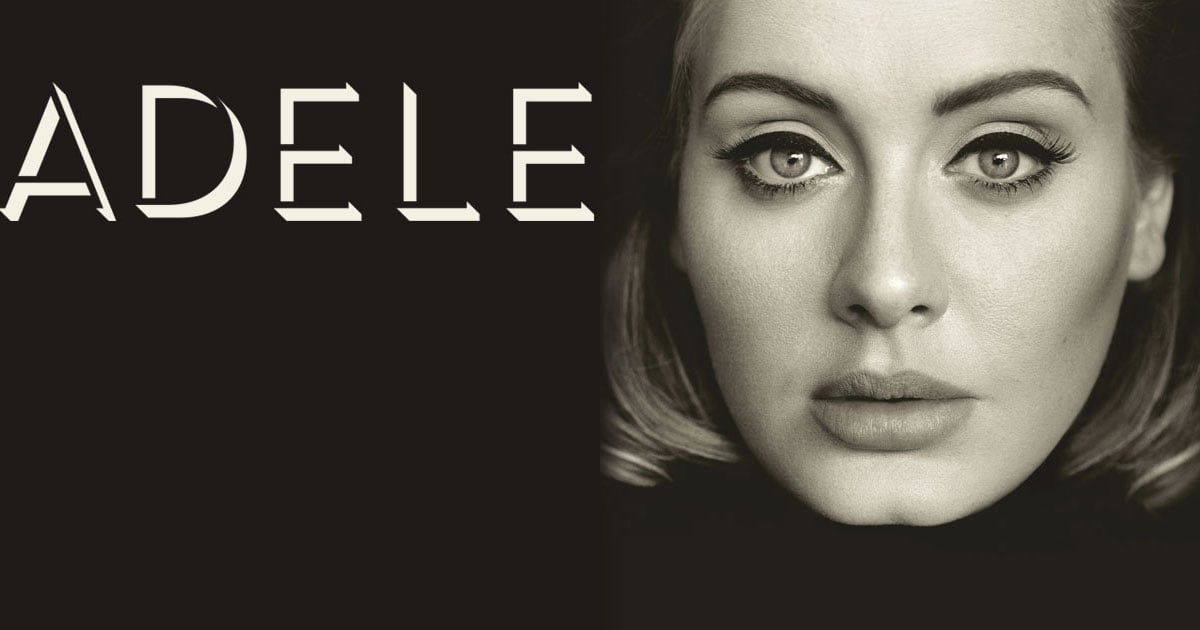
For the pop culture aspect of this lesson, I decided to touch on the topic of music, particularly Adele. She is well known to the world and has a British accent. However, when she sings, it's with an American English accent. Her accent was so thick that apparently subtitles were warranted in order to understand her. But she was speaking the same language!
Quantitative: StoryToolz rates this article as grade 11 which settles in nicely with the students I am teaching. The article is short and sweet, and while it mentions other singers facing a similar issue, the main focus is on the Adele section since she is the most notable. However, I actually think that it should be lower, seeing as it isn't that long and isn't quite as academic of an article. Qualitative: To go along with that that, I don't think this text is complex at all. It is simply stating that she needed subtitles due to her thick accent that is not noticeable when she sings. The text is relevant to the students in a couple ways. One being that they too have an accent and the other being that they know Adele and some students may even like her songs. The theme is quite simple and relevant. Vocabulary: Closed captioning (subtitles) Task and Reader Complexity: I don't really think there is much of a task to this other than to realize that some people can master certain accents. Like you and I can easily do British accents, we might not be good, but we know how. I think the students can realize that even if you can master the American English accent, it's a lot of work and may not necessarily work all of the time. It isn't a complex task at all.
The point of this video is to showcase people from all over the world, especially countries that do not speak English as a native language, doing their best impersonation of the American English accent. It is just a fun video where the students can laugh and everyone has heard of the infamous Buzzfeed and all of the fun things they do.
Quantitative: I didn't need to use Story Toolz for this sort of video to know that the grade would be low. At most it would be somewhere in the middle school grades. I think that this video is very simplistic in the wordage. Qualitative: Complexity wise, I also think it's very low on the scale. Students aren't necessarily required to understand the words, but rather they should pay attention more to the sounds of the words. Vocabulary: There's no difficult words. Task and Reader Complexity: The task for the students is to simply see the lighter side of this lesson. I would want the students to share their best impressions for some fun within the classroom, especially utilizing what they've learned from the lesson and the IPA chart. Really, this video wouldn't be touched on too much, but it's important to show them different people from all over speaking with the American accent.
These are just a few texts out of the endless possibilities for this lesson.
Work Cited in Order Discussed
Wolchover,
N. (2012, January 9). Why Do Americans and Brits Have Different
Accents? Retrieved October 19, 2016, from
http://www.livescience.com/33652-americans-brits-accents.html
Seeker Network. (2015, July 04). When Did Americans Lose Their British Accents? Retrieved October 26, 2016, from http://www.youtube.com/watch?v=0ymQ9YSo5rw
O'Grady, W., Archibald, J., Aronoff, M., & Rees-Miller, J. (1996). Contemporary Linguistics: An Introduction (6th ed.). Boston, MA: Bedford/St. Martin's.
The sounds of English and the International Phonetic Alphabet. (n.d.). Retrieved October 26, 2016, from http://www.antimoon.com/how/pronunc-soundsipa.htm
Rainbird, A. (2016, March 03). Adele's London Accent Leaves American Fans so Baffled They Need Subtitles to Understand Her. Retrieved October 26, 2016, from http://www.mirror.co.uk/3am/celebrity-news/adeles-london-accent-leaves-american-7490843
Buzzfeed. (2015, June 10). People Around the World Try and American Accent. Retrieved October 26, 2016, from https://www.youtube.com/watch?v=n3n-Osi_Mtg
How do you say pecan? How do you say coupon? Bag? Bagel?
I am sure you know exactly where this is going, having gone through countless arguments about who's right and who's wrong. However, there really is no distinct answer. No one is wrong and no one is right in this argument. The way you say specific words depends on your accent. For instance, growing up in the South, I say words like ambulance and Alabama with a long drawn out 'a' sound. This is simply because of the environment from which I was raised.
But what about English learners? When English learners speak, they do not have the clean cut standard American accent we speak here in southeastern Wisconsin. Instead, they have their own accents, deriving from their native language. Some accents are thick and we have trouble understanding them, while others are not so terrible, yet still distinct. Accents are normal, no matter the language, native and learned, accents are going to be prevalent. Despite this, there are still professionals that can help learners achieve this standardized accent, people known as accent coaches. I, for one, would be really interested in this professional, simply because of the linguistic engineering behind it.
The first point I would like to focus on is what exactly is an accent and are some accents better than others? I also know that most people think that standard English is based on American English, not British English. Why exactly is this? Is this because linguists simply said so? British English came before American English, so why is American English more important? Also, why do people care so much about how 'American' they sound? The next point would be to teach the standardized American English sounds, doing this via the IPA chart.
After some poking around, I found a couple sources to help begin my research (Note that this will most likely change):
A History of American English by J.L. Dillard - I want to look at this one and see if I can find any information regarding the change to standardized English.
My name is Casey Ange and I am currently in my third year at UW-Milwaukee. I am pursuing the major of Second Language Education for Early Childhood through Adolescence. Now, the most common response I get after mentioning my major is somewhere along the lines of, "Oh, do you speak Spanish?" The answer to that question is no, I have leaned a few words here and there, but I can't go beyond much more than "How are you?"
Actually, I have a background in Korean and my goals for the future involve living in South Korea to teach English there. Another shocker, mainly due to the instability of North Korea. While I might be going down the unconventional route for this particular major, I am happy with where I am heading. Eventually, I hope that after a few years of teaching in Korea and building up my CALP in Korean, that I will be able to be translator for some type of company there.
Those are my plans in a nutshell. Are they subject to change? Of course, but for the time being, this is me!